The Paradox of an Inability To Change
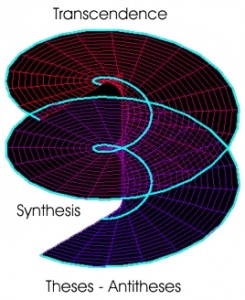 Many people who have Asperger’s Syndrome, that I work with as a Life Coach, often report to me that the central thing they hear most often about Asperger’s Syndrome is how it can’t be changed. It is in the hard-wiring and it isn’t going anywhere. While it is true that one cannot get rid of Asperger’s Syndrome (AS) and that it isn’t “going anywhere” does it naturally follow logically then that there is something beneficial to be derived from such strong focus on an inability to change?
Who is it that wants change? Who is it that expects change? Who is it that is conditioned to think not being able to fully change something means that all change is impossible?
Why, do you think, is there such focus on Asperger’s Syndrome in terms of those diagnosed with it as not having ability to change? What is the message taken out of this fact, granted, but focusing extensively or even exclusively on this fact?
Does focusing on the reality that people with Asperger’s Syndrome will always have it leave room for hope? If so, what do you think that hope is for? What could that hope be about? I’d really like to invite you to leave your thoughts below in the comment section.
While it is true that AS is not something that one can recover from or stop having somehow that does not mean that people with AS cannot continue to learn and develop new skills, coping skills and/or compensatory skills – they absolutely can.
Now, of course, not everyone with Asperger’s is exactly the same at all. This means that how each person with AS will think about or even be aware about wanting and/or needing to learn new ways of coping and compensating will vary. And, while not a statement set in stone, it does appear, from my experience, as a Life Coach, an aspie adult, and a person who communicates with many with AS and has read a lot about it, that among all the variables and differences in the ways that all of us with AS manifest it, gender differences seem to have led many to conclude that the way that Asperger’s effects males isn’t the same way it affects many females. Tony Attwood mentions this in his book, “The Complete Guide to Asperger’s Syndrome”. So this isn’t just me speculating.
For those of us diagnosed in adulthood who didn’t have any way to have early intervention or support like aspie children do today, we have to be creative with how we go about coping and compensating. In most areas of the world there aren’t even services for adults with Asperger’s – as if today’s aspie kids won’t be tomorrow’s aspie adults joining the rest of us in this abyss of sorts.
I have come to realize in my life and my journey with Asperger’s Syndrome that there has been a lot that I have continued to learn. I have pushed my own limits and in many ways still do. I think, initially, after being diagnosed at the age of 40, which was 13 years ago now, I was trying to get rid of AS – as if eh?
However, for the last 11 years or so it’s really been much more a journey of gratitude for me. Gratitude for all I have continued to learn and compensate for mixed with an ever-deepening radical acceptance of the paradox of Asperger’s. A paradox that sees AS being both challenging and a blessed-giftedness as well. I continue to experience this rich and profound paradox of what AS seems to take from me, at times, or impose on me at times, and all that AS gives to me, blesses me with most of the time.
Hope lies within this radical acceptance and self acceptance. It lies within the re-framing of society’s penchant for pathologizing difference. Society defines Asperger’s as a disability. I experience it as a different ability. It’s a matter of how we think and what we choose to think about it. In fact, most people I’ve ever talked to and know now or have known who have Asperger’s, like me, wouldn’t want to get rid of it even if they could.
The focus of neuro-typicals and society in general on pathologizing our differences leads to what I would say is an over-focus on what is labelled an inability to change. Who is it that is wanting all of this change? Is it those of us with AS or is it society and neuro-typicals who seem to think that just because we are not “like” them – poor us kind of attitude.
It is from this realization that I continue to hope that parents of today’s aspie kids, with their interventions, services and so forth, aren’t hoping to change their aspie kids from aspie kids into neuro-typical kids. Because that is the one comparison, the one unrealistic expectation that likely is responsible for such focus on how AS is in the hard-wiring and how it cannot be changed.
However, as I will write more about in up-coming blogs, paradoxically, even that which cannot be changed cannot fully limit some change, development, and continued learning. We must be careful not to judge that change or to quantify it based upon neuro-typical expectations or comparisons.
The paradox of an inability to change in an of itself, from the inside out, for this adult with Asperger’s, is realized as an on-going active and engaging invitiation to not invest in or attach to expectations that others want to put upon me. It continues to be a challenge for me to nurture my own nature, regardless.
Change, on-going development, and continued learning that takes place within a positive framework from an awareness and practice of radical acceptance for what is grants a freedom for, and comfort with, difference that does not fight against itself.
© A.J. Mahari, June 8, 2010 – All rights reserved.